


What Makes Driving in Dubai a Unique Experience?
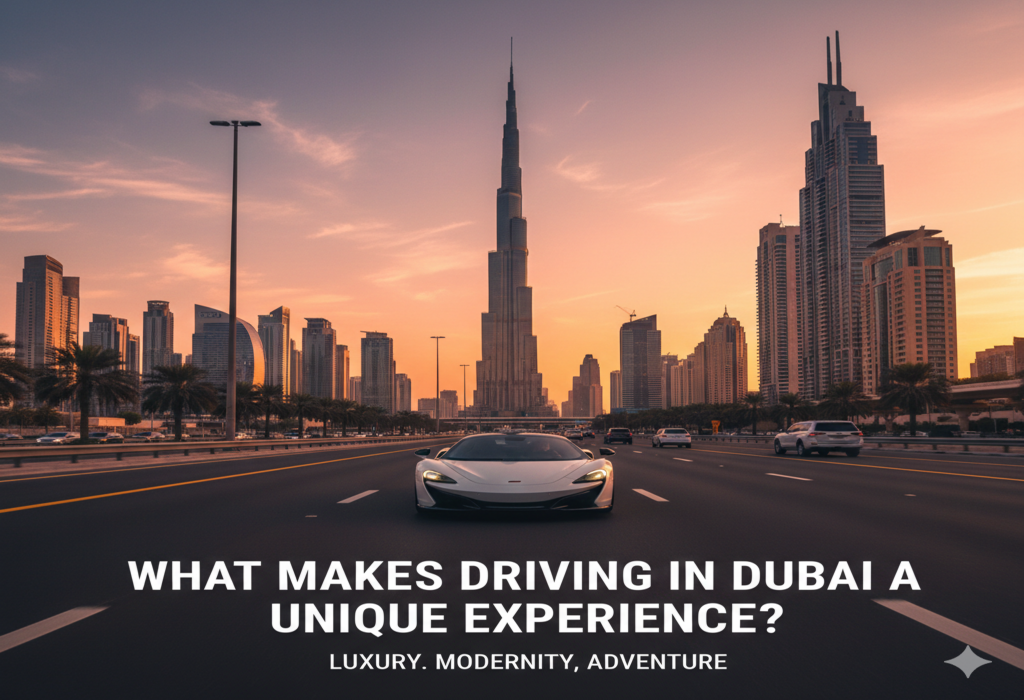
Dubai is often defined by its architectural marvels and luxurious lifestyle. However, for those who live and work in the city, the road network defines the daily rhythm. The driving experience in Dubai is unlike any other major metropolis in the world. It combines ultra-modern infrastructure with a distinct driving culture.
Navigating this city offers a glimpse into a future where technology and transport merge seamlessly. The roads are wide, well-maintained, and monitored by advanced systems. For a first-time visitor or a new resident, getting behind the wheel here can be awe-inspiring.
This article explores five key insights that define life on Dubai's roads. From the scale of the highways to the silent role of artificial intelligence, we look at what makes this environment special. Understanding these nuances is essential for anyone traversing the Emirates.
5 Key Insight Of Driving in Dubai a Unique Experience
The "Super-Highway" Scale
The first thing that strikes any driver in Dubai is the sheer scale of the roads. Sheikh Zayed Road, or E11, acts as the central artery of the city. In many sections, this highway expands to twelve or fourteen lanes. Driving down this corridor feels less like a commute and more like piloting a craft through a canyon of steel and glass.
The psychological impact of this width is significant. It creates a sense of openness that is rare in urban environments. Unlike the cramped, historic streets of European capitals, Dubai embraces space. This allows for higher speed limits and a feeling of constant forward momentum.
The Sense of Scale
Perception of distance and speed changes when the road is this wide. The signage is massive, designed to be read from hundreds of meters away at 100 km/h. Drivers must look much further ahead than they would in other cities.
This scale requires a specific type of spatial awareness. You are often sharing the road with hundreds of other vehicles at any given moment. Yet, the spacing usually feels adequate rather than claustrophobic. It is a testament to the ambitious urban planning that defines the UAE.
Traffic Flow Psychology
The design of these super-highways influences the psychology of the driver. There is a collective focus on maintaining speed and efficiency. The flow of traffic is generally smoother than in cities with older infrastructure.
This environment encourages a mindset of progress. Drivers are conditioned to merge smoothly and exit efficiently. While congestion happens, the infrastructure is built to clear it as quickly as possible. It turns the daily drive into a synchronized movement of thousands of machines.
The Silent AI Guardian
Modern driving in Dubai is heavily supported by technology. The Roads and Transport Authority, or RTA, utilizes one of the most advanced monitoring systems globally. This is not just about catching speeders with flash cameras.
Artificial Intelligence plays a massive role in maintaining order and safety. Smart cameras monitor lane discipline, phone usage, and even seatbelt compliance. This silent guardian is always active, processing millions of data points daily.
AI Surveillance Impact
The presence of AI monitoring shifts driver behavior significantly. Drivers are more likely to adhere to rules knowing that oversight is constant and accurate. This reduces the need for a heavy physical police presence on the roads.
It creates a self-regulating ecosystem where compliance is the norm. Aggressive behaviors like tailgating or sudden lane changes are detected and penalized. This technology directly contributes to the high safety standards of the driving experience in Dubai.
Technology Meets Routine Driving
For the daily commuter, this technology becomes part of the background. It is a subtle force that shapes habits without being intrusive. You learn to drive smoother and safer because the system rewards it.
This integration of tech and transport is a model for smart cities. It ensures that the roads remain safe despite the high volume of high-performance cars. It proves that safety and speed can coexist when managed intelligently.
The High-Speed Etiquette
Dubai highways are fast, with speed limits reaching 120 km/h or even 140 km/h. At these speeds, etiquette becomes a matter of safety. There is a strict, unwritten code regarding the fast lane, or the leftmost lane.
This lane is exclusively for overtaking. If a faster vehicle approaches from behind, the slower vehicle must move to the right. This "flash-to-pass" culture is unique and widely understood by locals.
Fast Lane Culture
Drivers in the fast lane are expected to be alert and responsive. Seeing headlights flash behind you is a polite request to yield the lane. It is not necessarily an act of aggression, but a signal of intent.
Understanding this norm is crucial for a harmonious drive. It keeps the traffic flowing and prevents bottlenecks in the high-speed lanes. Newcomers often find this intimidating at first but soon realize its efficiency.
Common Mistakes and Consequences
Refusing to move over is considered a major breach of etiquette. It can lead to frustration and dangerous undertaking maneuvers by other drivers. In Dubai, lane discipline is enforced by law as well as culture.
Failing to adhere to this can result in fines for obstructing traffic. The system is designed to prioritize flow. Learning to respect the fast lane is a rite of passage for any Dubai driver.
The Salik Ecosystem
Toll booths in many parts of the world mean stopping, queuing, and paying cash. Dubai introduced the Salik system to eliminate this friction entirely. It is a gate-less, free-flow tolling system that operates automatically.
Drivers simply stick a tag on their windshield and drive. Sensors above the highway deduct the toll amount as the vehicle passes at highway speed. There is no need to slow down or search for coins.
Flow-State Driving
This system contributes to what can be called "flow-state" driving. The absence of physical barriers maintains the rhythm of the journey. It reinforces the feeling that Dubai is a city built for movement.
For commuters, this saves valuable minutes every single day. It reduces the stress of the morning rush significantly. The system is seamless, efficient, and perfectly integrated into the road network.
Cost and Convenience Benefits
While there is a cost attached to each crossing, the convenience is undeniable. It encourages drivers to consider their routes carefully. Smart drivers often reinvest these time savings into vehicle care, checking for tyre offers UAE providers have to ensure their wheels are ready for these high-speed commutes.
Budgeting for Salik becomes part of the monthly vehicle expenses. It is a trade-off that most residents are happy to make for the sake of efficiency. The system exemplifies the city’s focus on smart, user-friendly solutions.
The Landscape Contrast
One of the most striking aspects of driving here is the visual contrast. In the span of 20 minutes, the view can change dramatically. You can drive from a dense forest of skyscrapers to the open expanse of the desert.
This transition is a defining feature of the driving experience in Dubai. It offers a visual reminder of the city's unique geographic position. It blends the futuristic urban landscape with the timeless beauty of the Arabian sands.
From Skyscrapers to Dunes
Driving out of the city center feels like leaving a sci-fi movie set. The Burj Khalifa and the Museum of the Future fade into the rearview mirror. Ahead, the horizon opens up, revealing rolling dunes and open sky.
This contrast impacts the driver's perception of the journey. It provides a mental break from the intensity of the city. The open desert roads offer a sense of calm and freedom.
Changing Road Conditions
The road conditions also shift during this transition. City roads are sheltered and constantly swept. Desert roads, however, face the elements directly.
Drivers may encounter wind-blown sand drifting across the tarmac. This requires a different level of attention and grip. It adds an element of adventure to even a routine weekend drive.
Conclusion
The driving experience in Dubai is a fascinating study in contrasts and capability. It is where massive infrastructure meets cutting-edge technology. It is a place where strict rules create a safe environment for high-speed travel.
From the automated efficiency of Salik to the visual drama of the skyline, every trip is memorable. The unique etiquette of the fast lane and the watchful eye of AI ensure order. It is a system that demands respect and rewards competence.
Whether you are a resident commuting to work or a visitor exploring the Emirates, the roads offer a unique perspective. They are the arteries of a city that never stops moving. Embracing this driving culture is the best way to truly understand the pulse of Dubai.
FAQ Section
Why is driving in Dubai considered unique?
Due to its wide highways, AI monitoring, and city-desert contrasts.
How does AI traffic monitoring affect drivers?
It encourages lane discipline and safety compliance without intrusive enforcement.
What is the “flash-to-pass” culture?
A common etiquette for safely overtaking in Dubai’s fast lanes.
How does the Salik toll system improve driving flow?
Gate-less tolls reduce stops and maintain steady traffic movement.

 English
 Arabic
 French
 Hebrew
 Spanish
 Portuguese
 Deutsch
 Dutch
Dutch
 Italiano
 Russian
 Romaian
 Portuguese (Brazil)
 Greek
Greek