


Big Data Security Market Overview, Key Players, and Growth Rate | 2035
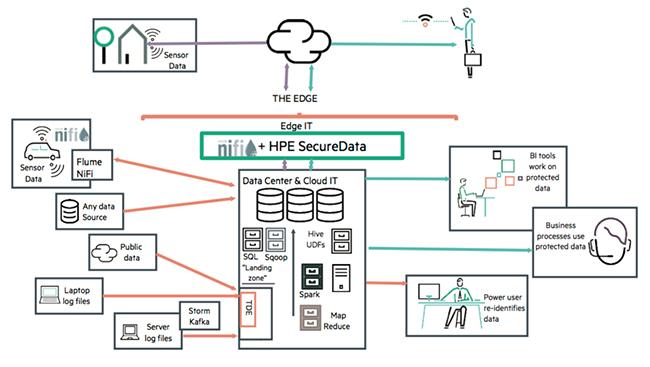
The landscape of the big data security market is being actively and continuously reshaped by a flurry of strategic Big Data Security Market Mergers & Acquisitions. In this rapidly evolving technological field, M&A serves as a critical strategic accelerator, allowing established companies to rapidly acquire new capabilities, enter high-growth market segments, and absorb highly specialized talent far more quickly than through organic, in-house development. The transactions are not random; they are highly targeted, with acquirers seeking to fill specific, well-defined gaps in their security portfolios. A major theme in recent M&A activity has been the acquisition of companies in the Data Security Posture Management (DSPM) space. These startups have developed innovative technology for automatically discovering where an organization's sensitive data resides (especially in the cloud), who has access to it, and how it is being used. For a large cloud security vendor, acquiring a DSPM company is a game-changing move, allowing them to provide their customers with crucial data-centric visibility that complements their existing infrastructure-level security tools.
Another key focus of M&A is the acquisition of technology related to automated data governance and fine-grained access control. As enterprises grapple with complex privacy regulations like GDPR and CCPA, the ability to automatically enforce access policies at a granular level (e.g., masking a specific column for one user while allowing another to see it) has become a critical requirement. Large data platform companies and cloud providers are acquiring startups that have built sophisticated policy-as-code engines to automate this process. This allows the acquirer to offer a more robust and compliance-friendly solution, which is a major competitive differentiator. The talent aspect of these deals, often called an "acqui-hire," cannot be overstated. In many cases, the primary asset being acquired is the target company's team of elite data scientists and engineers, who possess the rare skills needed to build these complex systems. The acquirer gains a world-class team that can be deployed to work on its broader strategic initiatives.
The broader strategic rationale for this M&A activity is the desire to create a unified and comprehensive data security platform. The long-term vision for many of the major players is to offer a single, integrated solution that can handle data security across the entire data lifecycle and across any environment—on-premise, single cloud, or multi-cloud. M&A is the primary vehicle for achieving this vision. For example, a company might acquire one startup for its data discovery technology, another for its access control engine, and a third for its data masking capabilities, with the goal of integrating all three into a single, cohesive platform. Private equity firms are also active in this space, often pursuing a "roll-up" strategy where they acquire several smaller companies in the data security space and merge them to create a single, larger, and more competitive entity. This intense M&A activity is a clear signal of the market's strategic importance and will continue to be a primary force in shaping its competitive structure. The Big Data Security Market size is projected to grow USD 53.87 Billion by 2035, exhibiting a CAGR of 14.81% during the forecast period 2025-2035.
Top Trending Reports -

 English
 Arabic
 French
 Hebrew
 Spanish
 Deutsch
 Turkish
 Dutch
Dutch
 Italiano
 Russian
 Romaian
 Portuguese (Brazil)
 Greek
Greek